
Preface:
Bird’s nest is a nest formed by the saliva secreted by several types of hornbills, mixed with other substances. The bird’s nest harvested cannot be eaten directly. What we usually refer to as imported bird’s nest is actually edible bird’s nest. Bird’s nest is mainly produced in Southeast Asian countries such as Indonesia, Malaysia, Thailand, and Vietnam, as well as in the coastal areas of Fujian and Guangdong in China. It has various benefits such as nourishing the lungs, beautifying the skin, enhancing energy, improving immunity, and anti-aging. It is very popular among consumers in China.
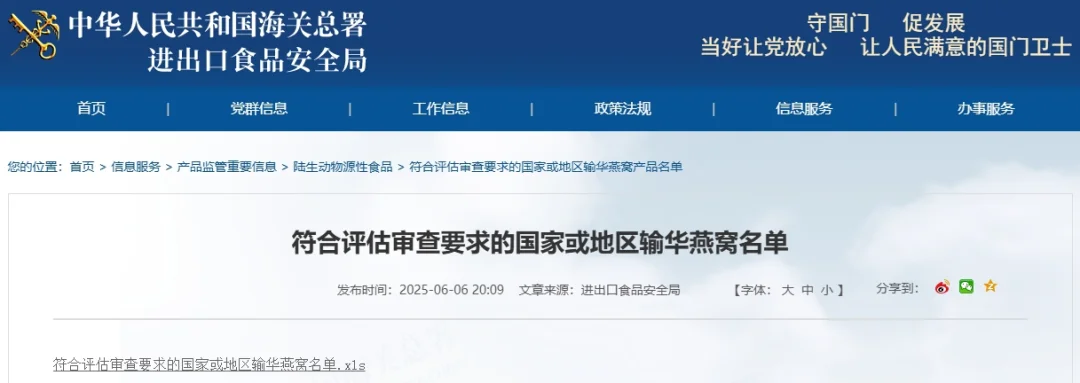
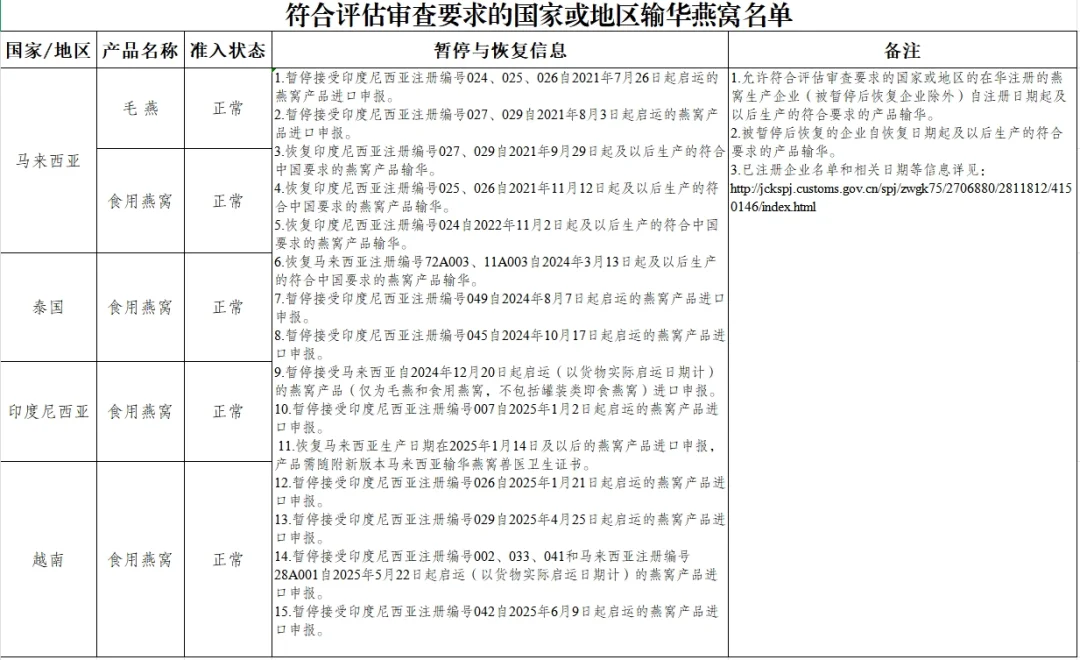 Source: General Administration of Customs, Import and Export Food Safety Bureau http://jckspj.customs.gov.cn/spj/xxfw39/cpjgzyxx/lsdwyxsp/lsdwyxsphsbmjjyjybm/4667895/index.html
In order to avoid paying the high import taxes, or due to the lack of origin certificates or traceability codes, many merchants and individuals take risks and enter the country illegally, thus violating criminal laws. Below, based on some cases, I will discuss bird’s nest imports, the crimes involved, common smuggling methods, the determination of tax rates, and the application of tax rates.
I. Methods of Importing Bird’s Nest
General Trade Import
General trade import (0110) is the most traditional and common method of import. According to the 2025 Import and Export Tax Schedule, bird’s nest is classified under “Other Tax Items Not Listed for Insects and Other Edible Animal Products.” The tax code is “0410.9010.”
Importing bird’s nest requires registration as an importer of imported food and cosmetics, as well as registration as a foreign production enterprise. As of the deadline for this article, there are 133 foreign production enterprises from Malaysia, Indonesia, Thailand, and Vietnam, and 3 enterprises from Hong Kong and Macau on the list of foreign production enterprises registered for imported food (http://jckspj.customs.gov.cn/spj/xxfw39/jkspjwscqyzcmd/4650504/index.html).
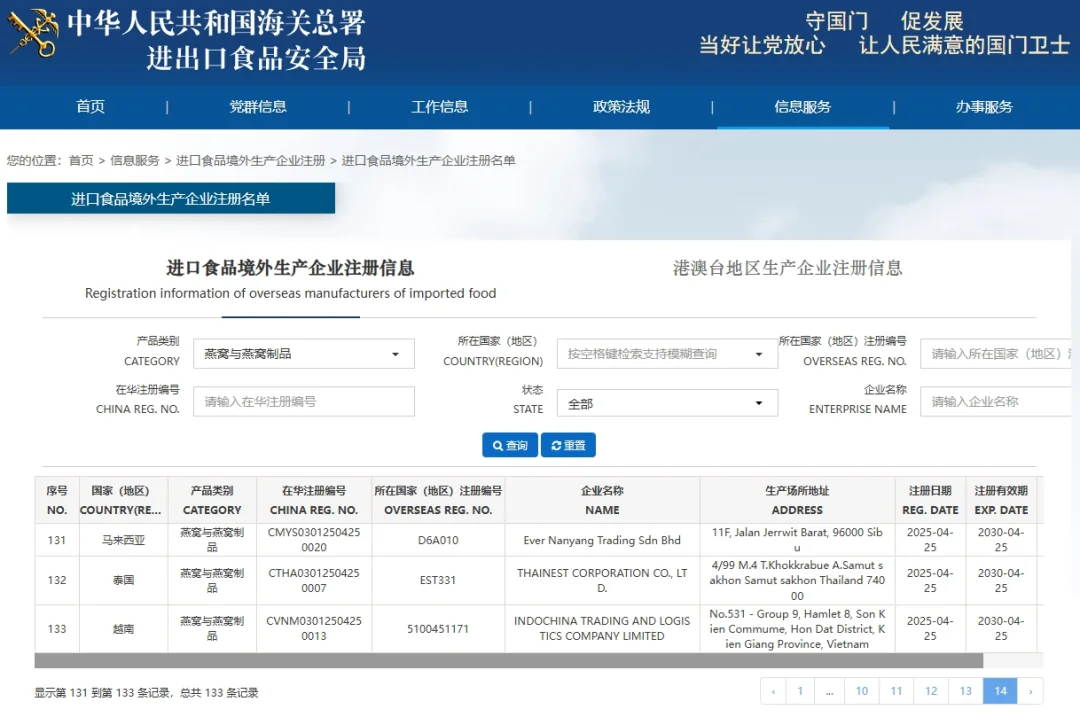
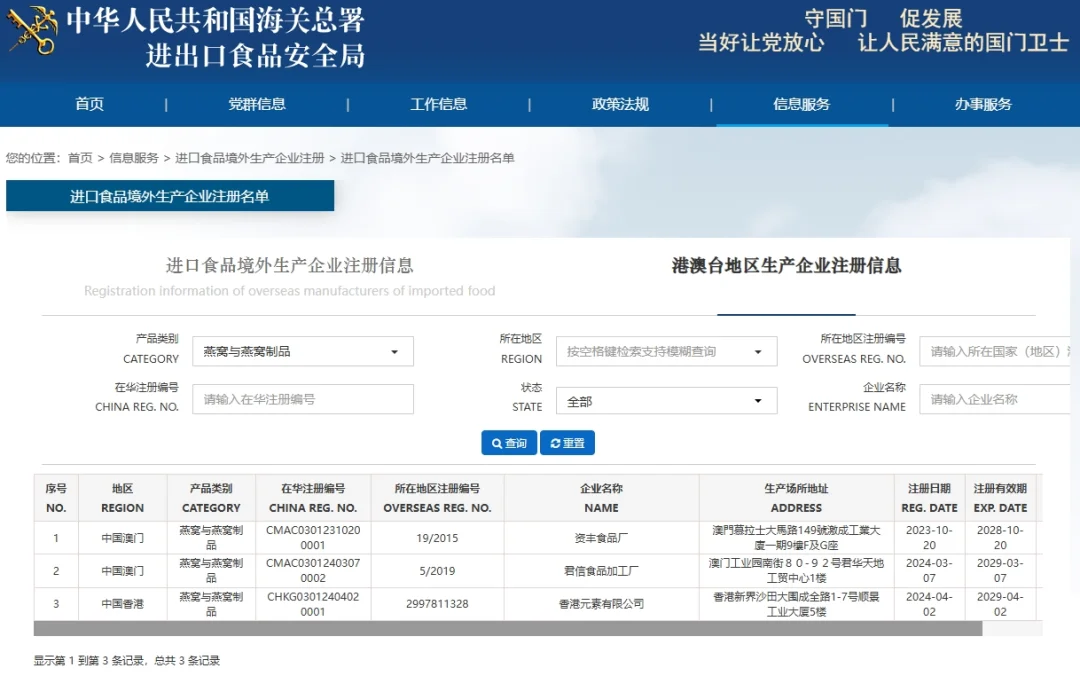 According to General Administration of Customs Announcement No. 158 of 2024, the quarantine approval for bird’s nest imported for human consumption is no longer required. However, contracts, invoices, packing lists, and bills of lading must still be provided. Additionally, according to the bilateral agreements between China and relevant countries regarding bird’s nest, bird’s nest imports must include official origin certificates and veterinary health certificates from the exporting countries. For example, in the past two months, General Administration of Customs issued Announcements No. 75 and 85 in 2025, which specify detailed requirements for the production and processing standards, inspection and quarantine, product certificates, packaging, and labeling for bird’s nest imported from Vietnam and Cambodia. Importers and foreign trade enterprises should pay close attention to these requirements.
Cross-border E-commerce Retail Import
It is well known that cross-border e-commerce retail imports in China are regulated through a list system. There are two main methods: 9610 retail direct import and 1210 online bonded import. According to the 2022 Cross-border E-commerce Retail Import Goods List, bird’s nest is only allowed under the 1210 model.
For domestic consumers, there is no need to worry about the method of import; they just need to purchase from legitimate stores or online platforms.
Lawyer’s reminder: Bird’s nest and its products are generally not allowed to enter the country through postal services.
Due to the high value and small weight of bird’s nest, many travelers may bring it into the country through carrying or mailing. However, considering the risk of bird flu and food safety issues, according to the “List of Animals and Products and Other Quarantine Items Prohibited from Being Carried or Mailed into the Country” (Ministry of Agriculture and Rural Affairs, General Administration of Customs Announcement No. 470), only “sterilized canned bird’s nest” can be brought into the country through this method.
If bird’s nest is brought into the country through postal services in large quantities, it may lead to criminal charges. For example, in a case, a foreigner was checked at the airport and found to have a large amount of bird’s nest in his luggage. He paid a fine of 123,352.58 yuan, which is enough to trigger criminal charges.
Case 1: (2013) Yue Gao Fa Xing Er Zhong Zi No. 87
In May 2012, Zhang Moumou (foreigner) flew from Jakarta, Indonesia, to Guangzhou Baiyun International Airport. He entered the country without declaring anything. The customs found 53.98 kilograms of bird’s nest in his luggage. After inspection, 28.6 kilograms of bird’s nest met the hygiene standards and were suitable for human consumption. The value of these birds was 443,377.5 yuan. According to the customs tax department, the amount of tax evaded was 123,352.58 yuan. After a second-instance judgment by the Guangdong High Court, Zhang Moumou was sentenced to 2 years in prison and a fine of 130,000 yuan. After serving his sentence, he was expelled from the country. The bird’s nest involved in the case was confiscated and turned over to the state treasury.
II. What Crimes Are Involved in Smuggling Bird’s Nest?
Our team used keywords such as “bird’s nest” to search for criminal judgment documents related to smuggling crimes in the past 5 years (as of March 2025). After removing some irrelevant data, we found 47 cases. Among them, 46 cases involved the crime of smuggling ordinary goods and items. One case involved the crime of smuggling goods and items prohibited from import and export.
Crime of Smuggling Ordinary Goods and Items
As a taxable product, bird’s nest has a tax code of “0410.9010.” The corresponding tariff rate is 25% for the most-favored nation rate and 80% for the normal rate. The agreement rate in ASEAN countries is 0. Additionally, 13% VAT must be paid on bird’s nest imports. In practice, most criminal cases involving bird’s nest smuggling are classified as crimes of smuggling ordinary goods and items. According to the Criminal Law and related judicial interpretations, individuals who evade taxes of 100,000 yuan (20,000 yuan for entities) will be convicted. Individuals who evade taxes of 250,000 yuan (500,000 yuan for entities) may face imprisonment of more than 10 years or even life imprisonment.
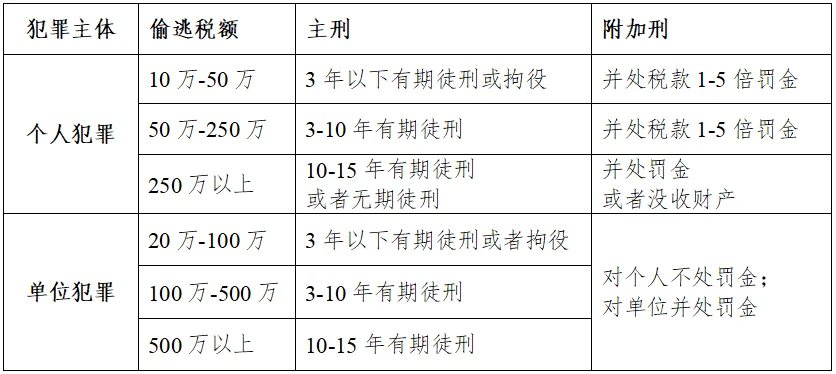 Penalty standards for the crime of smuggling ordinary goods and items
Lawyer’s reminder: For cases involving the crime of smuggling ordinary goods and items, there are no administrative pre-procedures. It is not possible to avoid criminal punishment by paying taxes or fines.
Crime of Smuggling Goods and Items Prohibited from Import and Export
In November 2024, China’s customs no longer carried out quarantine approval for products imported for human consumption. This means that enterprises no longer need to apply for import animal and plant quarantine permits. However, this measure is only to simplify the import process and improve efficiency. Bird’s nest still needs to meet relevant inspection and quarantine requirements during import. If it does not meet these requirements, it may still be considered smuggling goods and items prohibited from import and export. The maximum penalty for this crime is five years in prison and a fine.
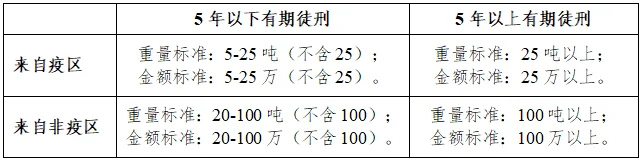 Penalty standards for the crime of smuggling goods and items prohibited from import and export
Areas Where Bird’s Nest Smuggling Is Common
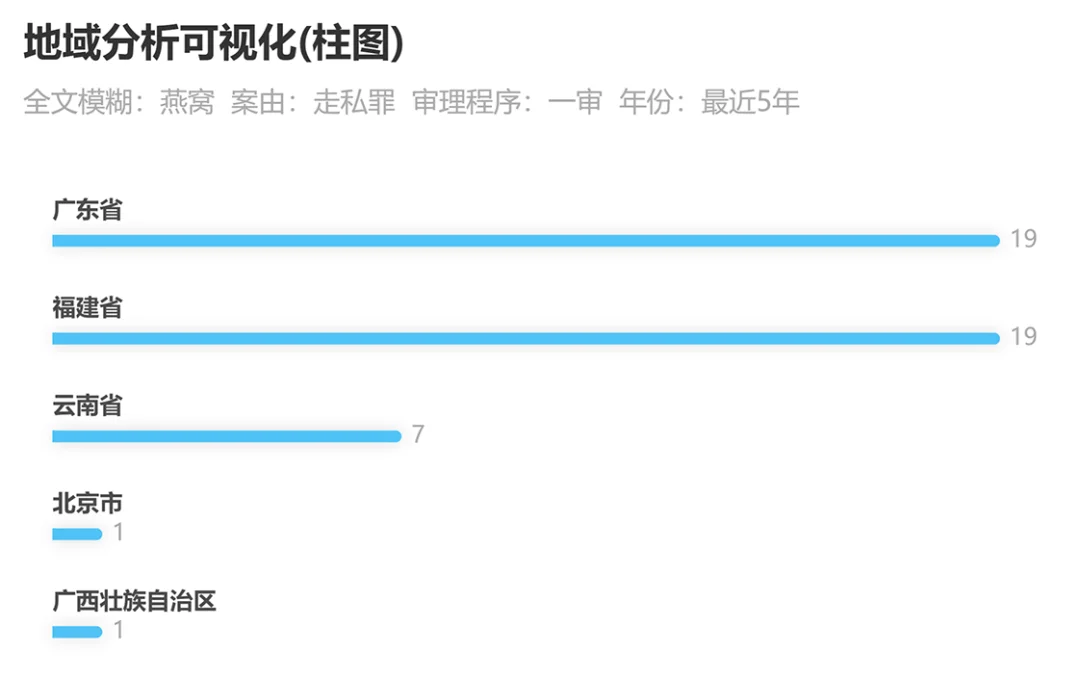 Map of places where bird’s nest smuggling occurred in the past 5 years (Alpha search data)
In terms of the regions where cases occur, although domestic suppliers are spread across the country, most smuggling activities occur in provinces such as Guangdong, Fujian, and Yunnan. This is mainly because smuggling is often carried out through non-tariff areas such as the southwestern border and southeastern coast.
In terms of the judicial authorities, the courts that handle these cases are mainly intermediate courts in Xiamen, Fujian, Shantou, Guangdong, and Wenshan. The customs anti-smuggling department is also responsible for investigating these cases. This reflects the concentration of large-scale cases in recent years.
Common Methods of Smuggling Bird’s Nest
Based on the behavior of criminals, bird’s nest smuggling often involves avoiding tariffs, using “water couriers” to smuggle it, underreporting prices, and “tax-paying” suppliers.
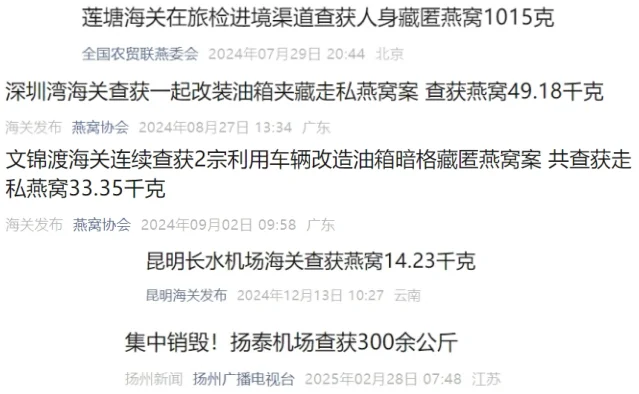 Some news reports about bird’s nest smuggling in the past year
According to the above search results and the cases handled by our team, there are 33 cases of smuggling through non-tariff areas (including “tax-paying” suppliers), 8 cases of “water couriers” smuggling, 3 cases of underreporting prices, 1 case of misrepresenting the nature of trade, and 1 case of indirect smuggling (knowing that it was smuggled goods, but still illegally purchased by couriers). A same case may involve more than two forms of smuggling. The above classification is to illustrate the diversity and emphasis of smuggling methods.
Smuggling Through Non-Tariff Areas
This is the most common method of bird’s nest smuggling. For example, in a case:
Case 2: (2020) Yun 26 Xing Chu 91
In October 2019, Long Mou, a Vietnamese man, contacted Wang Mou via WeChat and offered a reward of 1,000 yuan per piece to have the goods delivered at the Maoping Sino-Vietnamese border in Ma Guan County. Wang Mou then transported the goods from Vietnam to Ma Guan and sent them via express delivery to the address provided by Long Mou. Then, Wang Mou gathered Wei Mou, Dai Mou, and Yang Mou to discuss the delivery process. They assigned people to watch over the goods and used walkie-talkies and a WeChat group to communicate. On the morning of October 24, the Vietnamese person loaded the smuggled goods onto a vehicle. Dai Mou and Wei Mou loaded the goods and then drove away. Wang Mou drove the vehicle and sent people to watch over the goods. Later, the people were caught by the police at the Duolong border station in Ma Guan County. 69 bags (boxes) of bird’s nest were found on the spot.
At the beginning, this case was handled as an administrative case. After being certified by the Wenshan Prefecture Development and Reform Commission Price Certification Center, the total weight of the smuggled bird’s nest was 39.06 kilograms, with a value of 77.46 million yuan. According to the Tianbao Customs Tax Department, the amount of tax evaded was 19.8 million yuan. Since this amount reached the criminal case threshold, it was turned into a criminal investigation. Several defendants were sentenced to 10 months to 1 year and 4 months in prison and a fine of 30,000 to 40,000 yuan each.
When smuggling bird’s nest through non-tariff areas, either there is no traceable code, or it is done to avoid tariffs and VAT. In practice, there are two forms: one is using the geographical convenience of China’s border with Vietnam, using vehicles to smuggle the goods into the country. In a recent case, a group of people smuggled bird’s nest from a border area in Guangxi and were caught. Another form is using “Dafa” to unload the goods at non-tariff ports and then distributing them through domestic express delivery and trucks.
“Water Courier” Smuggling
Due to the high value and small size of bird’s nest, it is easy to carry or hide. Therefore, there are many cases of bird’s nest smuggling through “water couriers.” These “water couriers” bundle the bird’s nest in their luggage or hide it in luggage. Or, drivers of “two-vehicle trucks” hide the bird’s nest in the hidden compartments of the vehicles and bring it into the country without declaration. This often occurs at ports in Shenzhen and Zhuhai.
Underreporting Prices for Smuggling
Generally, customs require importers and exporters to declare contracts, invoices, packing lists, and inspection and quarantine certificates. Based on these documents, the price and origin are determined. However, in practice, many people underreport the price of bird’s nest to avoid paying or paying less tax. In a case I handled recently, the difference between the reported price and the actual price was 30%. This was considered a crime of smuggling ordinary goods.
“Tax-paying” Smuggling
The main reason for domestic suppliers to be involved in crimes is “tax-paying” smuggling. This means that the supplier hires someone else to pay the taxes. Most of them do not participate in the customs process and do not engage in smuggling activities. They just save on taxes by paying the “customs clearance fees” and “compliments” to the customs team. In practice, although suppliers do not participate in the customs process, they know about the tax evasion and are still responsible for criminal punishment. However, they are often considered accomplices.
Case 3: The Supplier in “Tax-paying” Smuggling Still Responsible
In early 2018, the defendant company W, through the decision of the defendant Li Mou, contacted a bird’s nest dealer in Vietnam, Huang Moumou, and agreed to buy bird’s nest from Indonesia at a price of 2,500 yuan per jin (including 200 yuan for customs clearance). Huang Moumou and others were responsible for transporting it into the country. After the goods were transported through the customs team of Wang Mou and others, W used a pseudonym and a non-real-name mobile phone to receive the bird’s nest via SF Express and sold it in China. Li Mou bought and smuggled 47 batches of bird’s nest, totaling 479 kilograms. According to customs, the amount of tax evaded was more than 90,000 yuan.
Due to Li Mou’s confession and meritorious service, the defendant company W was sentenced to a fine of 910,000 yuan. Li Mou was sentenced to 1 year and 5 months in prison, with a suspension of sentence of 2 years.
IV. Determination of Taxable Price
First, the taxable price should be used. According to Article 24 of the Customs Law, the taxable price of imported goods is based on the transaction price and the transportation and related costs before the goods reach the territory of the People’s Republic of China.
The price of bird’s nest is affected by various factors, such as the origin, processing method, and type of bird’s nest (燕盏, 燕条, 燕碎). These factors often lead to significant price differences. However, in cases of bird’s nest smuggling, it is often difficult to determine the type and quality of the goods involved, especially in non-tariff areas.
If the actual transaction price cannot be determined, the price should be determined according to the Customs Law, the Measures for Determining Taxable Prices for Imported and Exported Goods, and other relevant regulations. The methods include:
- The price of the same goods;
- The price of similar goods;
- The reverse deduction price;
- The cost calculation price;
- The “reasonable” method.
The determination of price is highly controversial in practice, especially the last two methods.
In practice, customs often hires qualified price appraisal agencies to determine the price. Other evidence, such as WeChat messages, invoices, transaction records, statements, and confessions, are used to determine the taxable price. Additionally, as mentioned in Case 3, “tax-paying” fees, compliments, and sales fees are also included in the taxable price according to Article 24 of the Customs Law.
As a defender, it is important to question the price properly.
First, the original evidence, such as invoices, delivery documents, messages, and transaction records, should be true, complete, and consistent with each other. They should not contradict the price appraisal results.
Second, if the previous methods are applicable, the later methods cannot be used. Especially when using the “reasonable” method, the customs should explain the reasons and calculation method.
Third, the qualifications of the price appraisal agency must be legal. The conclusions and methods used must comply with relevant regulations.
V. Application of Tax Rates
As mentioned earlier, the tariff rate for bird’s nest is 25% for the most-favored nation rate and 80% for the normal rate. The agreement rate in ASEAN countries is 0. Additionally, 13% VAT must be paid on bird’s nest imports. Using the most-favored nation rate, the overall import tariff rate is 41.25%. Using the normal rate, the overall tariff rate is 103.4%!
Can the Agreement Rate Be Used?
Generally, the agreement rate can be used if the following conditions are met: ① The import is declared and the agreement rate is stated; ② A valid origin certificate is provided; ③ Proof of direct transportation is provided. For example, in the criminal judgment (2021) Yue 05 Xing Chu 83, the court stated that “not all goods and items from countries that have signed trade agreements with China can enjoy the agreement rate or preferential rate. The agreement rate or preferential rate must be applied if the goods are from countries that have signed agreements with China. A valid origin certificate from the government of the country of origin must be provided, and the conditions for direct transportation must be met, and the import must