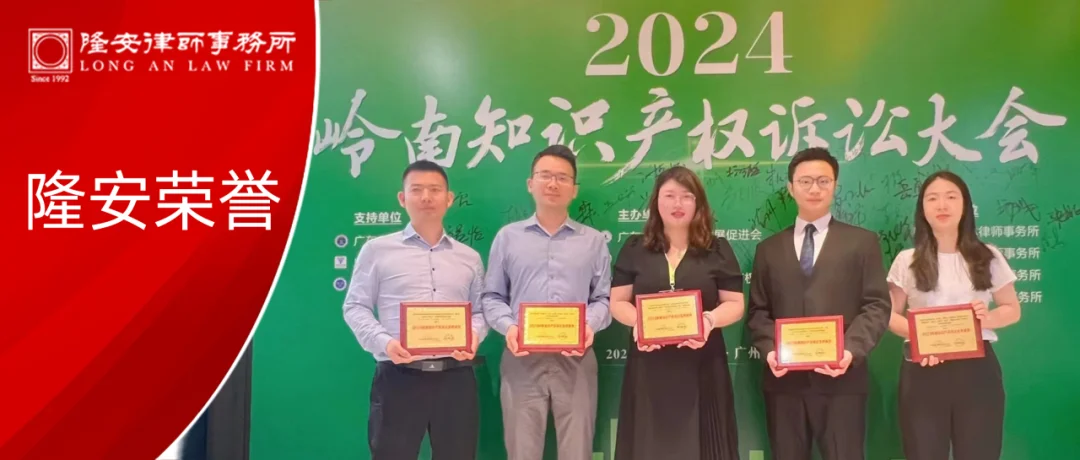
Recently, the “2024 Lingnan Intellectual Property Litigation Conference”, jointly organized by the Guangdong Province Knowledge Economy Development Promotion Association, the Guangzhou Lawyers Association, and the Law School/Intellectual Property College of Jinan University, was successfully held in Tianhe, Guangzhou! This conference announced the list of award-winning “2023 Lingnan Intellectual Property Litigation Cases”. Five cases handled by lawyers Wu Rangjun, Yang Wenfeng, Liu Huan, Yu Yao, and Dong Yun of our firm were honored to be on the list!
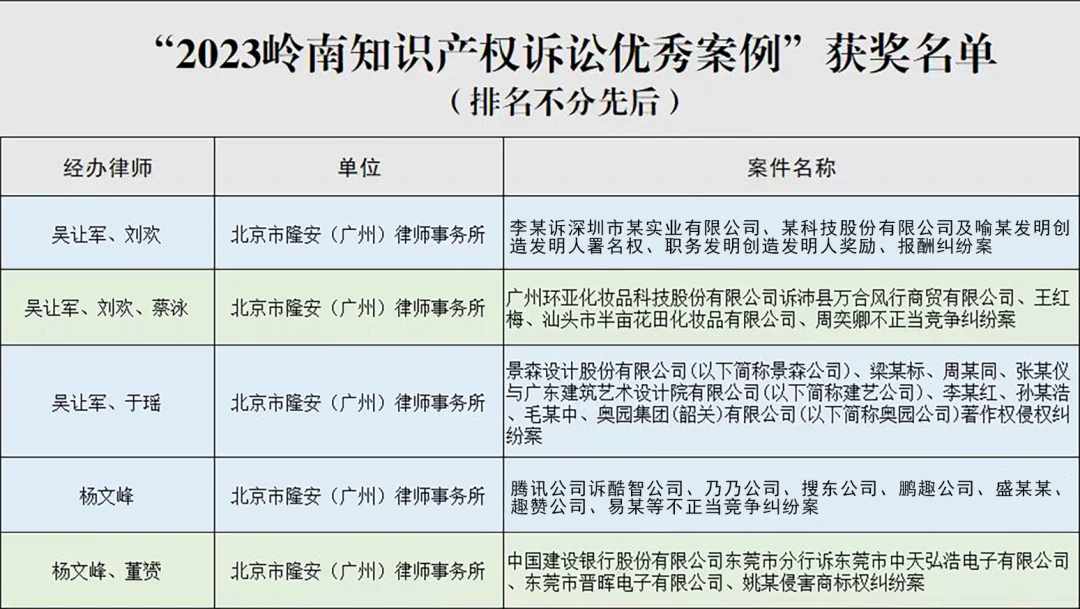 Award-winning cases
Case 1
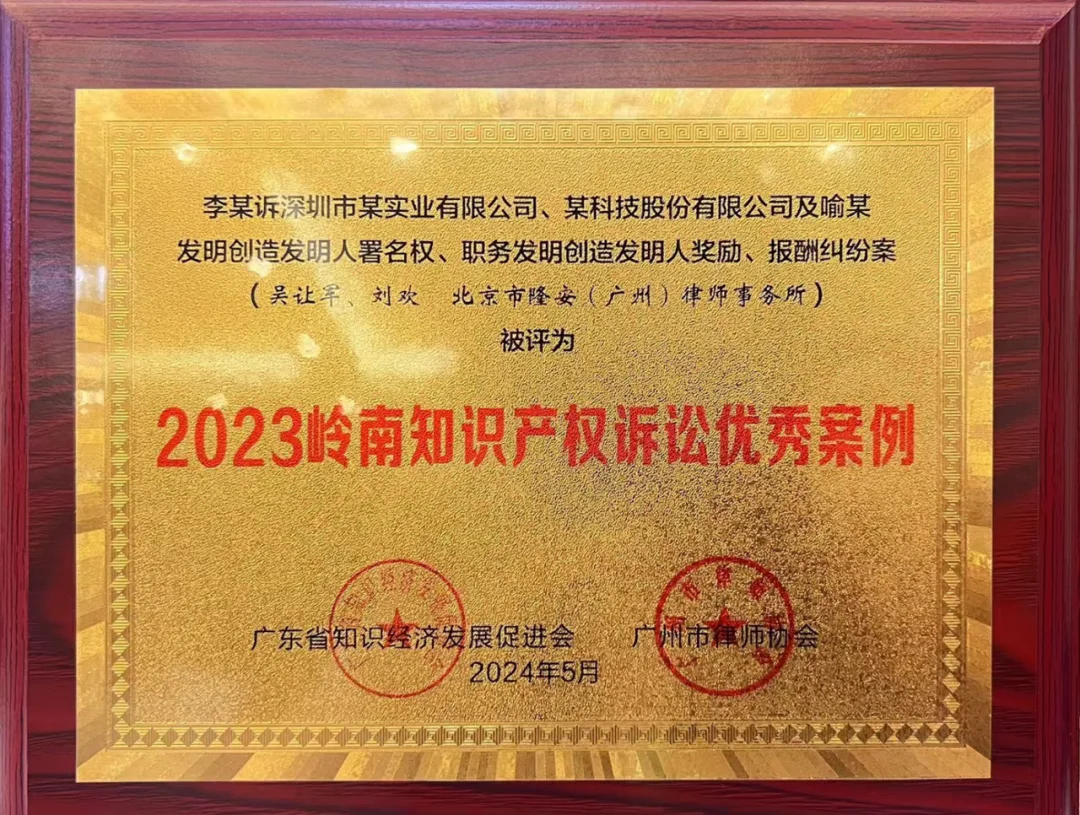 Case: Li Mou v. Shenzhen某 Industrial Co., Ltd.,某 Technology Co., Ltd., and Yu Mou – Dispute over the right of name use of inventors of invention creations, rewards and remuneration for job-related invention creations
Lawyers handling the case: Wu Rangjun, Liu Huan
Basic facts of the case
In June 2011, Li Mou filed a lawsuit with the Shenzhen Intermediate People’s Court, requesting the court to order the defendants, namely某 Technology Co., Ltd., Shenzhen某 Industrial Co., Ltd., and Yu Mou, to pay fees as the inventors of three patent inventions (designs).
On September 3, 2013, the Shenzhen Intermediate People’s Court issued Civil Judgment No. 487, 488, and 490 of (2011) Shenzhong Fa Zhi Min Chu Zi, dismissing all of Li Mou’s claims.
In November 2013, dissatisfied with the Civil Judgment No. 488 of (2011) Shenzhong Fa Zhi Min Chu Zi, Li Mou appealed to the Guangdong Higher People’s Court.
On December 12, 2013, the Guangdong Higher People’s Court issued Civil Judgment No. 830 of (2013) Yue Gao Fa Min San Zhong Zi, dismissing Li Mou’s appeal and upholding the original judgment.
In 2014, Li Mou applied for retrial to the Supreme People’s Court, but the retrial was suspended due to Li Mou’s involvement in a criminal case.
On September 14, 2023, the Supreme People’s Court ruled to reject Li Mou’s retrial application.
Significance of the case
This case has a long time span and difficulties in collecting evidence. It also involves complex issues such as technical comparisons, standard selection, public relations in the media, and social impact. The attorneys organized evidence, collected materials, analyzed the opponents, and managed public relations to formulate a comprehensive litigation strategy, ultimately achieving a full victory in the case.
The lawyers handling the case, entrusted by the defendants, carefully handled each stage of the case, conducted in-depth research on laws and regulations and judicial practice. From both theoretical and practical perspectives, they focused on the core disputes of the case and successfully convinced the court to accept their view, dismissing all of the plaintiff’s claims and effectively protecting the interests of the parties involved.
Case 2
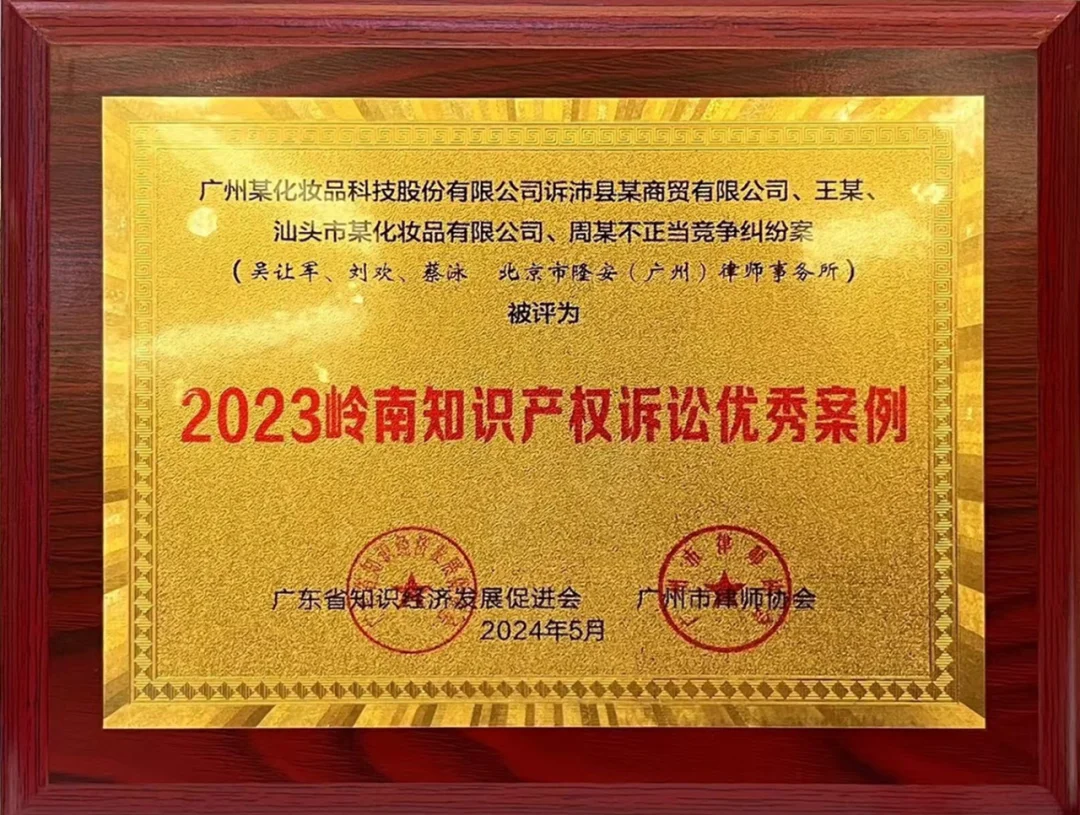 Guangzhou Huanya Cosmetics Technology Co., Ltd. v. Peixian Wanhe Fengxing Trading Co., Ltd., Wang Hongmei, Shantou Banmu Huatian Cosmetics Co., Ltd., Zhou Yiqing – Dispute over unfair competition
Lawyers handling the case: Wu Rangjun, Liu Huan, Cai Yong
Basic facts of the case
Guangzhou Huanya Cosmetics Technology Co., Ltd. (hereinafter “Huanya Company” or “plaintiff”) claimed that Peixian Wanhe Fengxing Trading Co., Ltd. (hereinafter “defendant 1”), Wang Hongmei (hereinafter “defendant 2”), Shantou Banmu Huatian Cosmetics Co., Ltd. (hereinafter “defendant 3”), and Zhou Yiqing (hereinafter “defendant 4”) produced and sold products with packaging and designs similar to those of the plaintiff’s protected products without its permission, constituting unfair competition. The plaintiff filed a lawsuit with the Xuzhou Intermediate People’s Court (hereinafter “Xuzhou Court”).
On February 20, 2023, and March 15, 2023, Xuzhou Court held hearings in this case.
On April 7, 2023, Xuzhou Court ruled that the defendants committed unfair competition and were ordered to pay a compensation of one million yuan.
After the first-instance judgment, the plaintiff and defendants 1, 3, and 4 appealed. Eventually, the Jiangsu Higher People’s Court issued a final judgment on December 28, 2023, adjusting the compensation amount from the first-instance judgment to 2 million yuan on the basis of the original compensation.
Significance of the case
This case involves an unfair competition dispute in the daily chemical industry regarding packaging and designs with some influence. It is difficult to organize evidence, but in a market economy, the phenomenon of copying and imitation of packaging and designs is common. However, in such cases, the lack of evidence regarding the plaintiff’s fame prevents the protected products from being recognized as having some influence, or the lack of evidence regarding infringement results in a low compensation amount. This kind of commercial imitation is a highly relevant issue. In judicial practice, the rate of adjustments in cases involving major intellectual property rights is very low. This case is a rare case where the second-instance judgment was adjusted and the compensation was doubled. After the judgment was issued by the Jiangsu Higher People’s Court, it received widespread attention from the daily chemical industry, judicial practice, and the public. In this case, our party, Guangzhou Huanya Cosmetics Technology Co., Ltd., is a well-known domestic daily chemical and cosmetic company. Its “Ziyuan Silicon-Free Scalp Care” series of products have unique and popular packaging and designs. In recent years, the plaintiff found that there were many competitors on the market that maliciously imitated its packaging and designs, misleading consumers and seriously affecting the market share and business reputation of our party. This constitutes an act of confusion as defined in the Anti-Unfair Competition Law, causing significant economic losses to our party and negatively affecting the fair competition order in the market.
The lawyers handling the case, entrusted by the plaintiff, carefully handled each stage of the case, conducted in-depth research on laws and regulations and judicial policies, and focused on the core disputes of the case. They successfully convinced the court to accept their view, supported the plaintiff’s claims, and effectively protected the interests of the parties involved.
Case 3
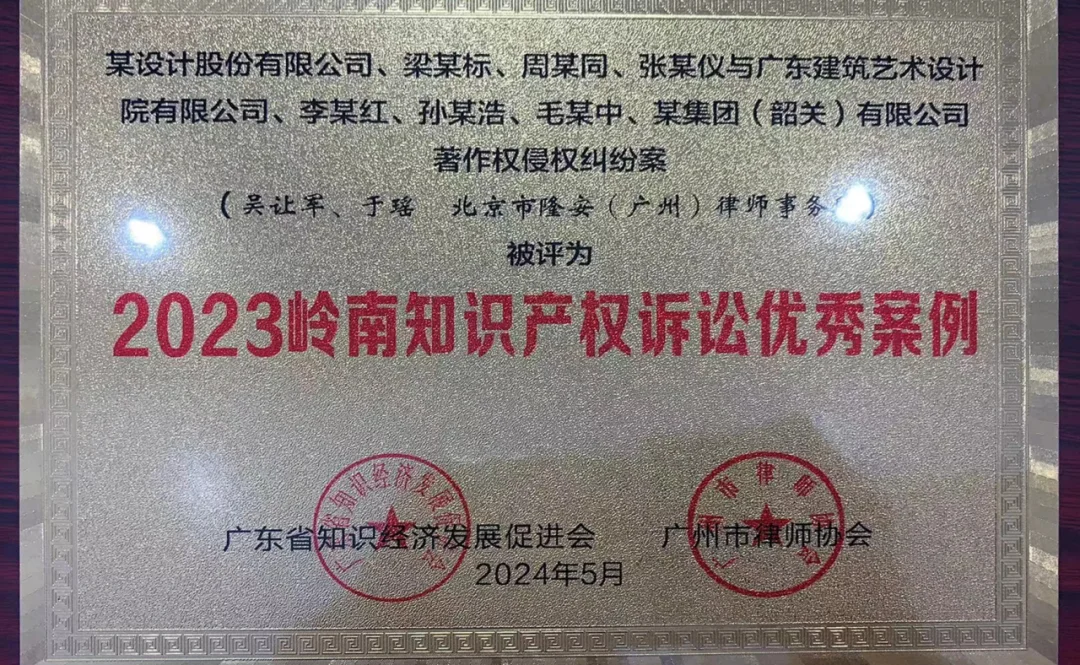 Jingsen Design Co., Ltd. (hereinafter “Jingsen Company”), Liang Moubiao, Zhou Moutong, Zhang Mouyi v. Guangdong Architectural Art Design Institute Co., Ltd. (hereinafter “Jianyi Company”), Li Mouhong, Sun Mouhao, Mao Mouzhong, Aoyuan Group (Shaoguan) Co., Ltd. (hereinafter “Aoyuan Company”) – Dispute over copyright infringement
Lawyers handling the case: Wu Rangjun, Yu Yao
Basic facts of the case
This case is a rare case of infringement of architectural drawing works in the intellectual property field. The team got involved in the case three days before the second-instance hearing. They represented the defendants in the lawsuit, and the case successfully overturned the first-instance judgment, dismissing all of the plaintiff’s claims and resulting in a full victory. The details are as follows:
In 2014, Aoyuan Company signed a “Jingsen Design Contract” with Jingsen Company, agreeing on the planning and design work of the Aoyuan-Shaoguan Impression project and the construction drawings. Jingsen Company, Liang Moubiao, Zhou Moutong, and Zhang Mouyi created the Jingsen drawings and original drafts.
Subsequently, Jingsen Company and Aoyuan Company had disputes over costs and drawing modifications, and sued in court regarding the aforementioned contract. Jingsen Company did not cooperate with Aoyuan Company in advancing the project approval and subsequent matters. To promote the project, Aoyuan Company signed a “Jianyi Design Contract” with Jianyi Company, requiring Jianyi Company to assist in advancing the subsequent matters of the project, including minor modifications to Jingsen Company’s drawings and signing of the company’s name on the drawings. Jianyi Company cooperated with Aoyuan Company in the subsequent application process, and Jianyi Company and its employees signed on the drawings.
Subsequently, Jingsen Company and its employees sued Jianyi Company and other entities in the Tianhe District People’s Court of Guangzhou. Jingsen Company and its employees claimed that Jianyi Company and others violated their right of name use and modification, and demanded a compensation of over 1 million yuan, as well as punitive damages.
In December 2021, the first-instance court ruled that Jianyi Company and others violated Jingsen Company’s right of name use, ordering Jianyi Company and others to apologize in Guangzhou Daily and to pay compensation. Both parties were dissatisfied with the first-instance judgment and appealed to the Guangzhou Intellectual Property Court.
Three days before the second-instance hearing, the team got involved in the case, understood the details, and issued a service plan on the same day. The next day, they determined to entrust the case, and on the third day, the lead lawyer appeared in court. The second-instance court fully accepted the team’s supplementary appeal arguments and ultimately determined that the defendants did not commit copyright infringement, overturning the first-instance judgment and dismissing all of the plaintiff’s claims. The case achieved a full victory.
Significance of the case
This case is a complex and novel copyright case. It was included in the 2023 AIPPI China Branch’s Top Ten Hot Cases in the copyright field. This case involves many basic theoretical issues in copyright law, as well as cases that intersect with contract and copyright law. It poses a high test for the lawyers handling the case’s expertise in copyright law and their ability to manage the overall case. The victory in this case serves as a good example and reflects the high professionalism of the lawyers in the firm.
Case 4
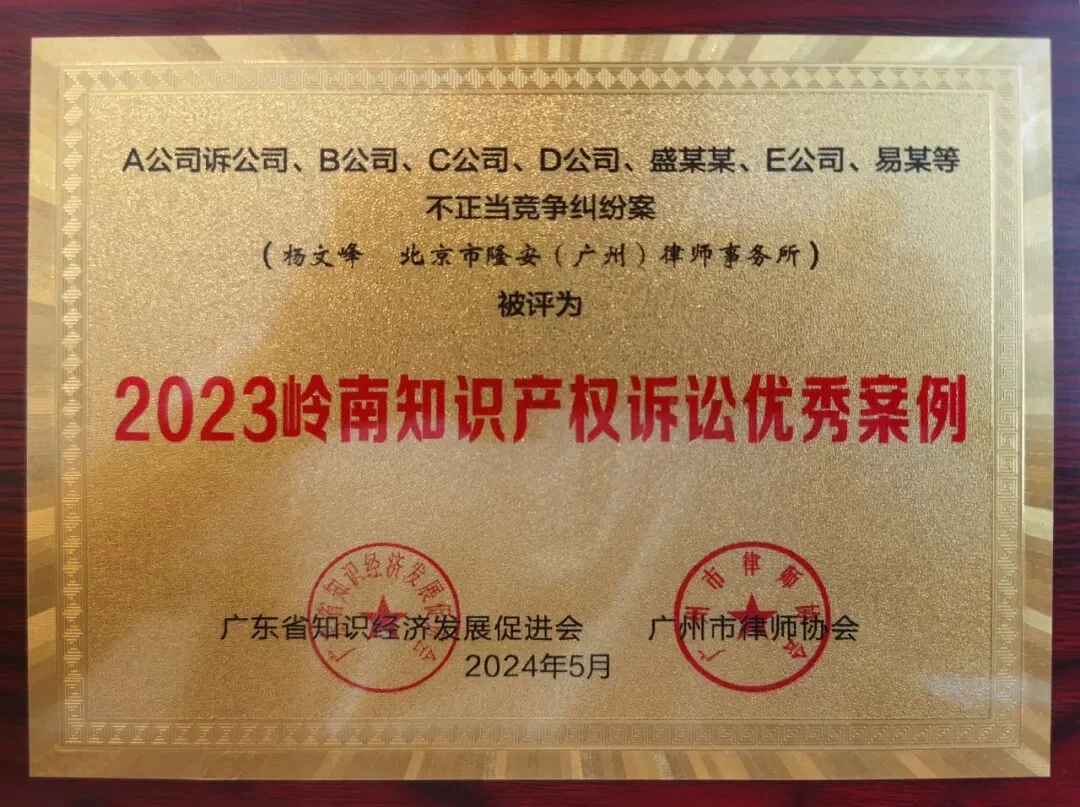 Tencent Company v. Kuedi Company, Nainai Company, Soudong Company, Pengqu Company, Sheng Moumou, Quzan Company, Yi Mou – Dispute over unfair competition
Lawyer handling the case: Yang Wenfeng
Basic facts of the case
Kuedi Company, Nainai Company, and Pengqu Company jointly developed and operated the “qq Boosting Tool” (renamed “Kuedi Boosting Tool” and continued to be operated), which guided users to bind to QQ and provided paid services, thereby illegally generating false boasting data such as name badges, comment likes, comment views, and space visits on the QQ platform. Soudong Company and Quzan Company, as the payers, were jointly liable for the infringement. Sheng Moumou and Yi Mou, as sole shareholders of Pengqu Company and Quzan Company respectively, failed to prove that their company assets were independent from their personal assets and thus bore joint liability for the company’s debts.
After two-instance court proceedings, it was determined that Kuedi Company, Nainai Company, Pengqu Company, Soudong Company, and Quzan Company jointly committed unfair competition acts that hindered the normal operation of online products or services provided by other operators. All defendants jointly compensated Tencent Company with over 2 million yuan in economic losses and reasonable expenses.
Significance of the case
First, this case is a typical example of combating internet data-fabrication (data falsification) activities. False traffic can deceive ordinary users and platforms, misleading consumers and violating their interests. It also misleads Tencent’s judgments and decisions based on traffic statistics and specific users, harming Tencent’s business interests and undermining fair, just, and transparent market principles, as well as normal competition mechanisms, creating an illusion of industrial prosperity and affecting the healthy development of the industry.
Second, according to the “Internet Special Article” of the Anti-Unfair Competition Law, the actions of the defendants are considered “using technical means to hinder or disrupt the normal operation of online products or services provided by other operators.” This has practical and theoretical significance for protecting the rights of claimants in similar cases in the future and for regulating “gray and dark production” on the internet.
Case 5
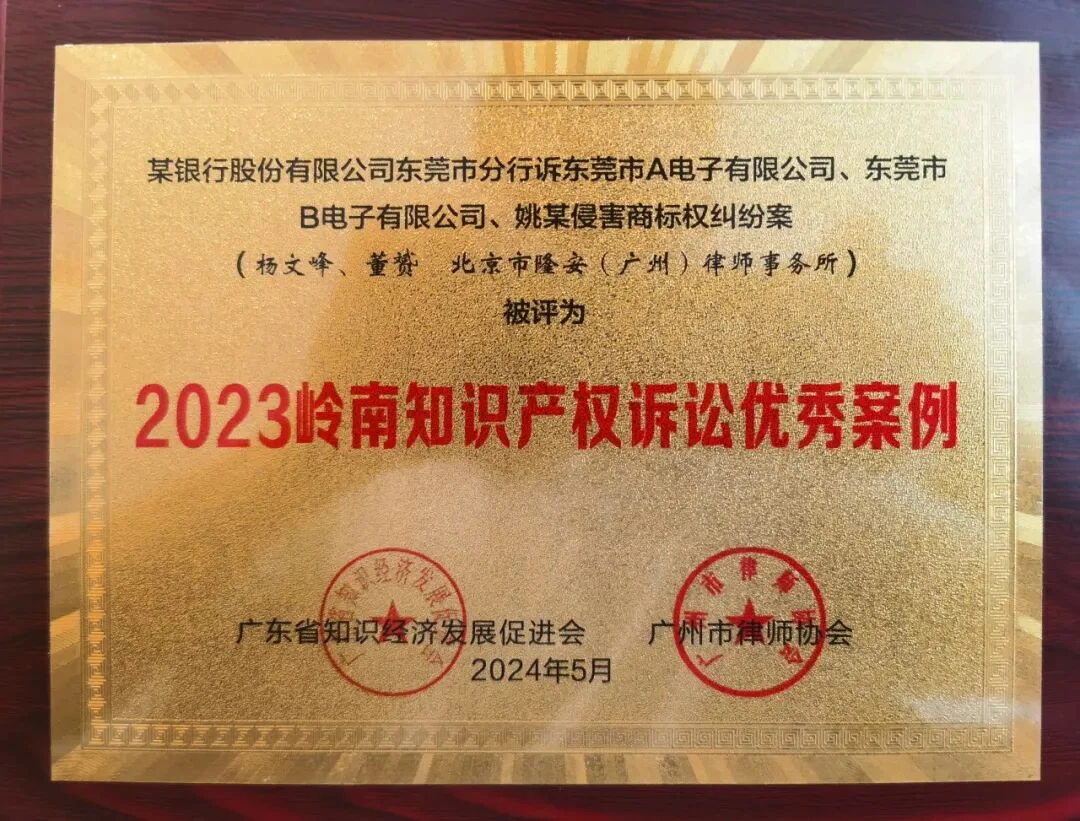 China Construction Bank Co., Ltd. Dongguan Branch v. Dongguan Zhongtian Honghao Electronics Co., Ltd., Dongguan Jinhui Electronics Co., Ltd., Yao Mou – Dispute over trademark infringement
Lawyers handling the case: Yang Wenfeng, Dong Yun
Basic facts of the case
On January 25, 1996, China Construction Bank Co., Ltd. applied for the registration of trademark No. 1049653 “ ” and announced its registration on July 7, 1997. The service category covered by this trademark was savings banks and financial services under Class 36. This trademark includes the bank’s emblem and management regulations for the use of the emblem, as well as a visual identity manual. It has been in use since 1996.
Defendant 1, Zhongtian Honghao Electronics Co., Ltd., applied for multiple trademarks “ ” under Class 9, such as computer display screens. These trademarks were prominently used on the company’s information public platform, official websites, WeChat accounts, and the computer display screens and packaging of the products they produced and sold. After multiple applications for invalidation and objections to the State Intellectual Property Office, the trademark continued to be registered and used. Defendant 2, Jinhui Electronics Co., Ltd., and Defendant 1, Zhongtian Honghao Electronics Co., Ltd., have the same legal representative, actual controller, senior management, registration or office address, business scope, and contact number. They also hold joint product launch events, indicating that they operate together. The electronic components produced by them are supplied to Defendant 1, making Defendant 1 its downstream supplier. Therefore, Defendant 1 and Defendant 2 constitute joint infringement. Defendant 3, Yao Mou, as a sole shareholder of Defendant 1, is legally required to bear joint liability for Defendant 1’s compensation debts.
After trial, the court determined that the registered trademark No. 1049653 “” of China Construction Bank is a well-known trademark under Class 36, including savings banks and financial services. The use of the “” logo constitutes trademark infringement. Therefore, the court ordered the defendants to stop the infringement and compensate China Construction Bank for economic losses and reasonable expenses.
Significance of the case
First, this case is the first example in China where a bank’s emblem trademark is recognized as a well-known trademark through judicial proceedings. It is also the first time that a bank’s emblem trademark is recognized as a well-known trademark, and it has received written praise from the headquarters of China Construction Bank. It has significant social impact and serves as a good example and promotes the protection of intellectual property rights in China’s banking industry.
Second, it overcomes the difficulty of collecting evidence. Initially, the client only knew that the defendants applied for similar trademarks. They did not know whether the defendants actually used the alleged infringing logo or how they used it. Through detailed investigations by the attorney, it was found that the defendants’ products were not sold through online platforms or offline stores. They were usually sold in bulk to internet cafes or exported abroad, making the infringement highly concealed. Through extensive investigations, the attorney was able to obtain evidence of the alleged infringing products through second-hand platforms and direct purchases from manufacturers as agents. This proved that the defendants benefited greatly from the infringement, and the client obtained information about the defendants’ bank accounts, including nearly 1.4 million yuan in the defendants’ accounts.
Third, the bank’s emblem trademark is mainly used under Class 36 (savings banks, financial services, etc.). The trademarks used by the defendants under Class 9 (computer display screens, etc.) are different categories. The plaintiff can only protect its rights comprehensively by recognizing “” as a well-known trademark across categories. Additionally, with the trend of “cloud handling” and “digitalization” in the banking industry, it is difficult to determine whether the alleged infringing products cause confusion or misleadance, or whether they reduce the prominence of the bank’s emblem trademark or damage its reputation. Although providing a large amount of evidence on use and fame is very difficult, through nearly half a year of detailed investigations by the attorney, over two thousand pages of evidence were compiled. Ultimately, the court not only supported the attorney’s claim that the “” emblem trademark constitutes a well-known trademark under Class 36, including savings banks and financial services, and applies the confusion and dilution theory, but also supported the claim that the related companies of the defendants operate together, commit joint infringement, and bear joint liability.
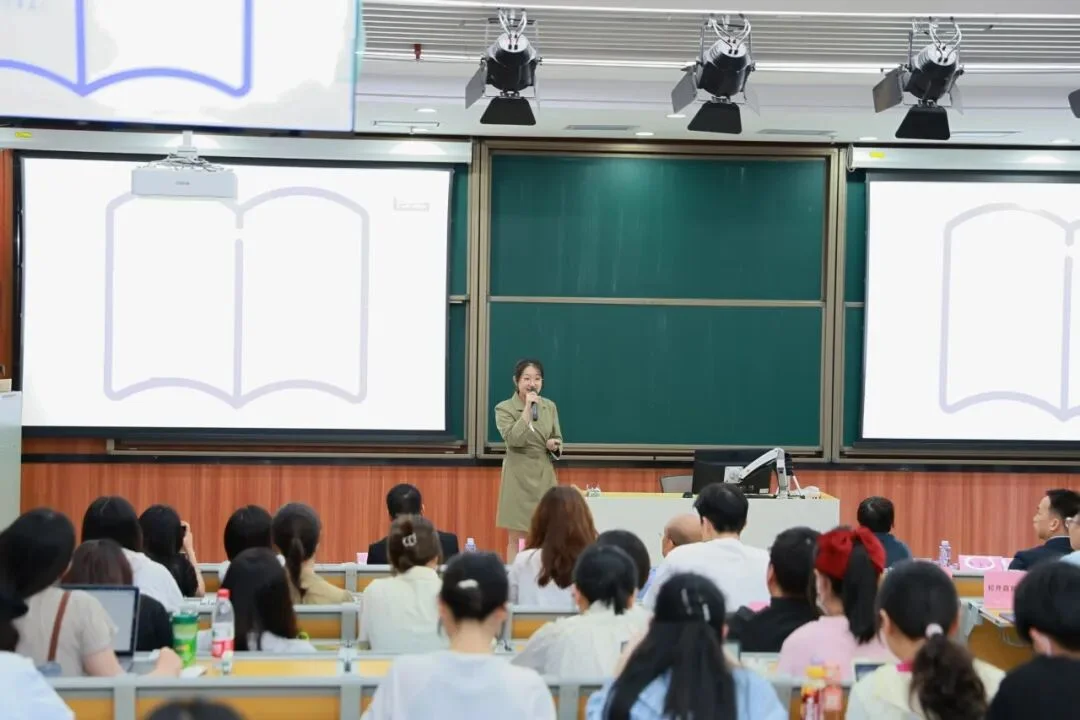 During the theme sharing session of the 2024 Lingnan Intellectual Property Litigation Conference, Yu Yao, a lawyer from the Longan Bay Intellectual Property Research Center and a member of the Longan Guangzhou Yanshang Legal Team, was also invited to share insights on the aforementioned award-winning cases. She discussed complex issues such as the determination of the right of name use for special commissioned works and the exercise of the right of name use.
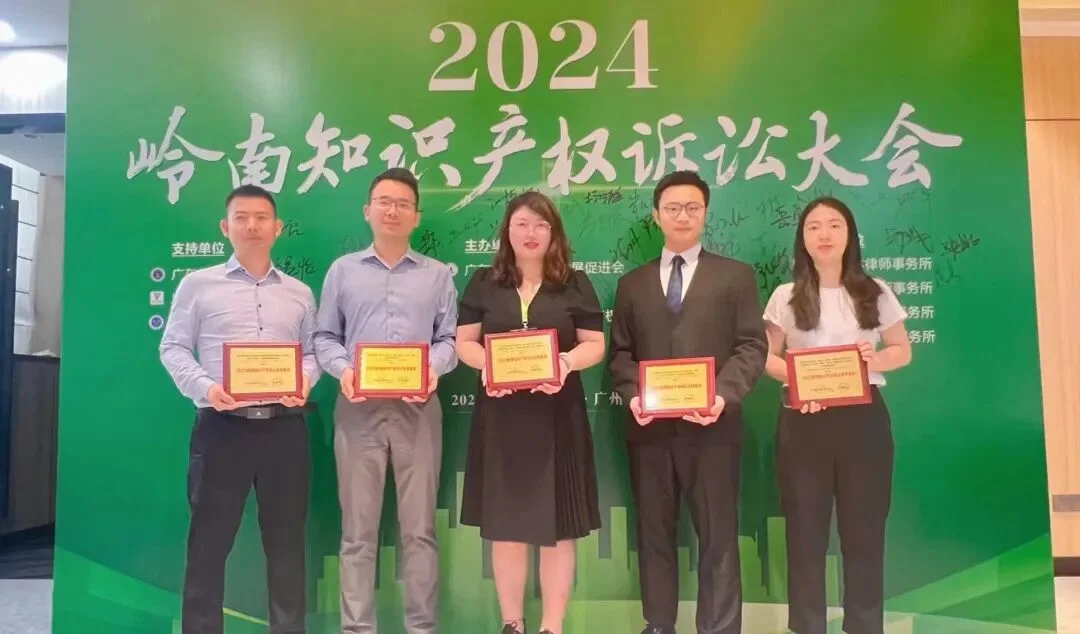 Among the 46 award-winning cases in this Lingnan Intellectual Property Litigation Conference, Longan Guangzhou had 5 cases honored, reflecting the profound expertise and strong capabilities of Longan Guangzhou in the field of intellectual property. In the future, Longan Guangzhou will continue to focus on intellectual property issues, train more outstanding intellectual property lawyers, and provide high-quality, efficient, and professional legal services to clients.
Lawyer profile
 Wu Rangjun Lawyer
Lawyer Wu Rangjun graduated from Peking University and holds dual qualifications as a lawyer and patent agent. His main areas of expertise include intellectual property, civil and commercial litigation and arbitration, and permanent legal counsel and compliance