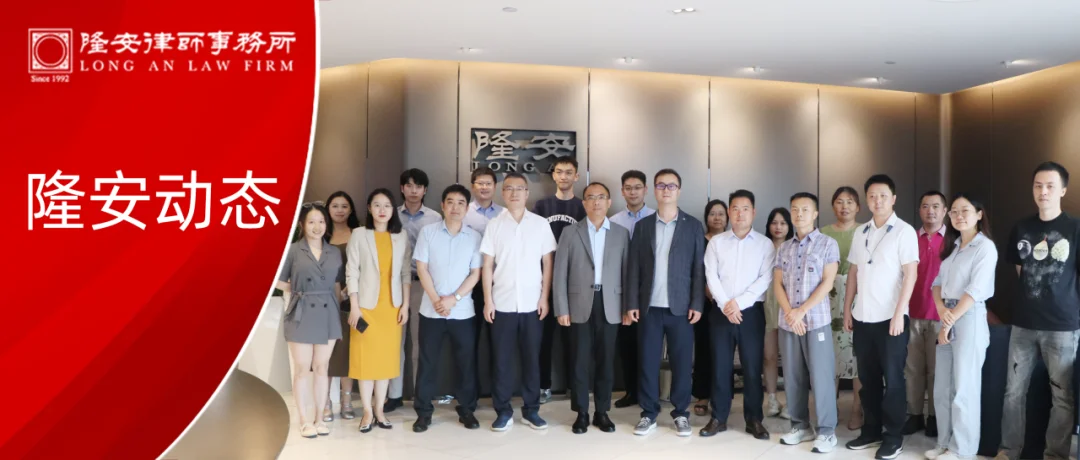
On June 19, the “Music Industry Hot Issues Seminar Salon”, organized by the Copyright Law Committee of the Guangdong Province Lawyers Association, the Copyright Law Committee of the Guangzhou Lawyers Association, and the Guangdong Pop Music Association, and undertaken by Beijing Longan (Guangzhou) Law Firm and the Nanyue Notary Office, was successfully held in Longan Guangzhou. Lawyer Wu Rangjun, Deputy Director of the Copyright Law Committee of the Guangdong Province Lawyers Association, Deputy Director of the Copyright Committee of the Guangzhou Lawyers Association, and Deputy Director of the Longan Guangzhou Management Committee, served as the host of this event. Mr. Ma Tie, head of the Legal Department of the Chinese Music Copyright Association, Lawyer Lin Zerin, member of the Copyright Law Committee of the Guangzhou Lawyers Association and partner at Guangdong Zhengping Tiancheng Law Firm, Director He Donghua of the Music Copyright Committee of the Guangdong Pop Music Association, and Deputy Director Tang Yi of the Nanyue Notary Office Office Management Committee gave special presentations. This event was carried out both online and offline. It was broadcast live on the “Luxing” APP and the official account of “Longan Guangzhou Law Firm”, attracting over 600 people to watch online.
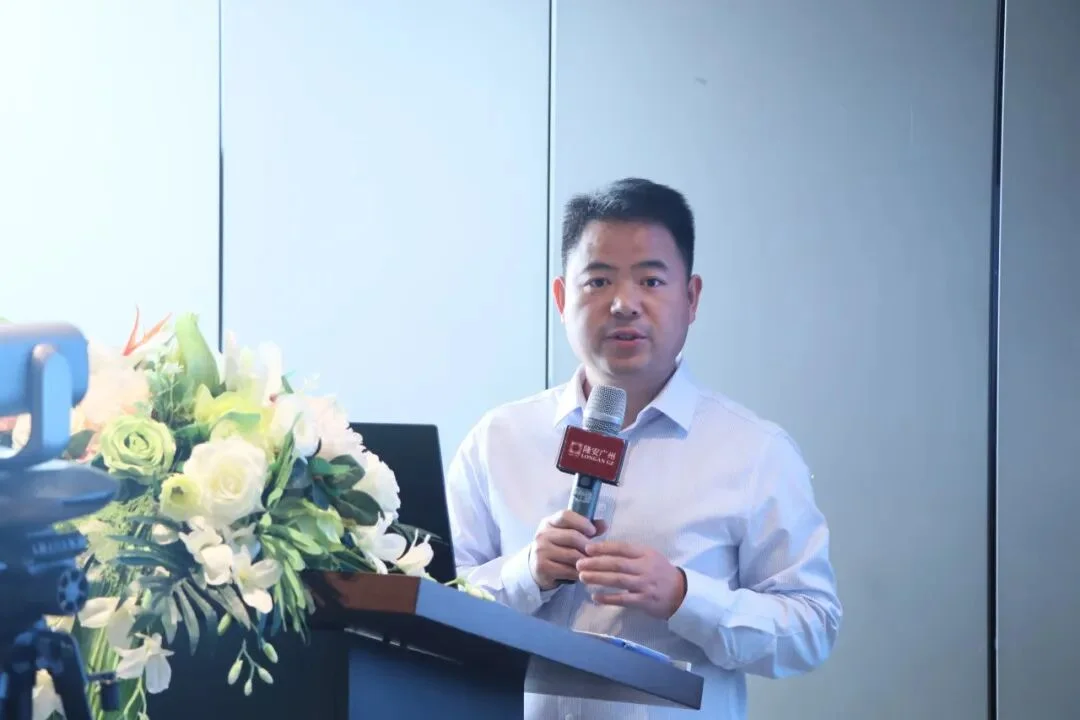 Lawyer Wu Rangjun
Deputy Director of the Copyright Law Committee of the Guangdong Province Lawyers Association, Deputy Director of the Copyright Committee of the Guangzhou Lawyers Association, and Deputy Director of the Longan Guangzhou Management Committee
Lawyer Wu Rangjun first extended a warm welcome to the guests from the Copyright Law Committee of the Guangzhou Lawyers Association, the Copyright Law Committee of the Guangdong Province Lawyers Association, the Guangdong Pop Music Association, and the Nanyue Notary Office, as well as lawyers from other law firms. Lawyer Wu said that issues related to music intellectual property rights have existed for a long time. With the rise of video formats such as short videos and live broadcasts, legal problems related to music copyright infringement have emerged continuously. This event hopes to, through the professional expertise of all parties, conduct in-depth analysis of hot issues and current situations in the music industry, and propose targeted suggestions on music copyright management and rights protection.
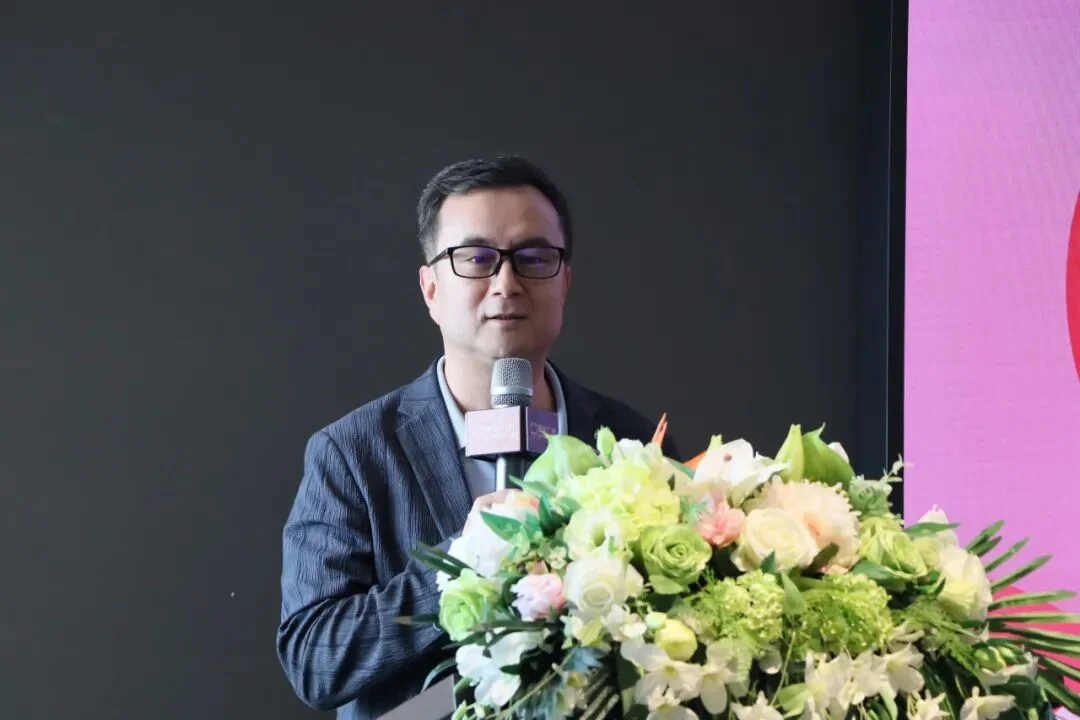 Mr. Ma Tie
Head of the Legal Department of the Chinese Music Copyright Association
Mr. Ma Tie introduced the basic situation of the Music Copyright Association under the topic of “Difficulties in the Collective Management of Music Copyright”. The Music Copyright Association of China (abbreviated as “MCSC” or “Music Copyright Association”), established on December 17, 1992, is a collective management organization for music copyright jointly initiated by the Chinese Musicians Association and the State Copyright Bureau. Its main tasks include admitting members, issuing copyright licenses, collecting copyright fees, and distributing copyright usage fees. Then, Mr. Ma Tie analyzed the difficulties in litigation and rights protection of the Music Copyright Association from three areas: audiovisual works, cable TV, and IPTV. According to relevant provisions of the Copyright Law and the Bern Convention, the authors of works such as music in audiovisual works have the right to exercise their copyrights independently; in the cable TV field, the disseminator must obtain authorization for the public dissemination or retransmission of works; in the IPTV industry chain, the main parties include content providers, integrated broadcasting platforms (general platform + sub-platforms), and transmission and distribution providers. Finally, Mr. Ma Tie used the case of cable retransmission by the company “Ge Mou Cable” to point out the difficulties in protecting music copyrights at present.
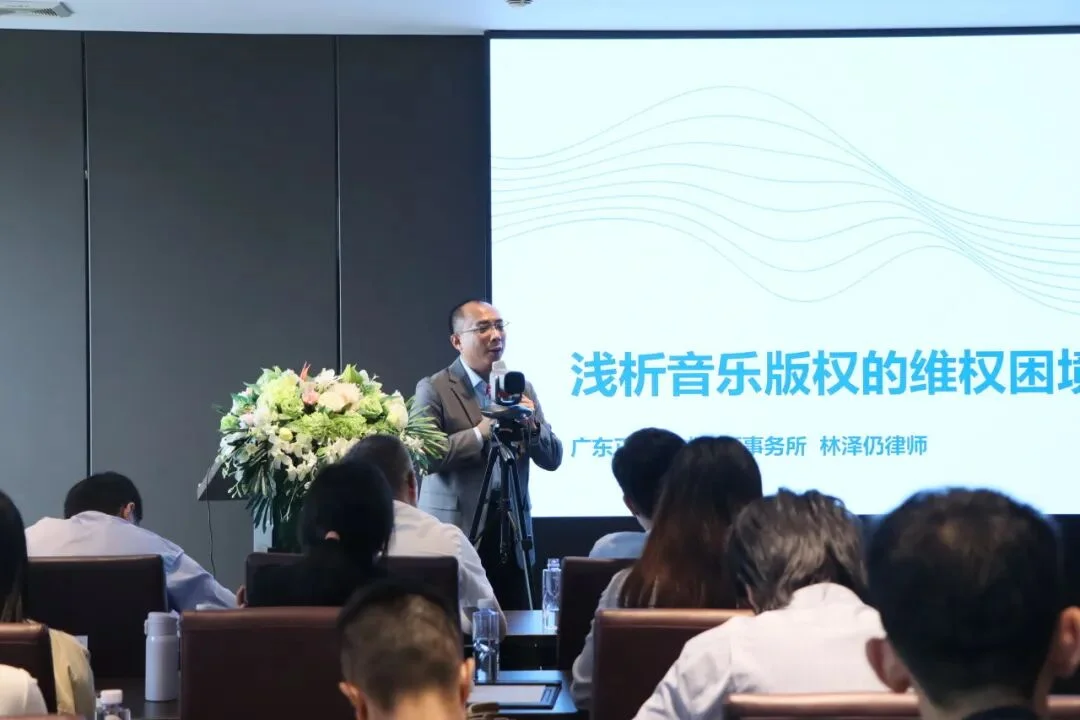 Lawyer Lin Zerin
Member of the Copyright Law Committee of the Guangzhou Lawyers Association, partner at Guangdong Zhengping Tiancheng Law Firm
Lawyer Lin Zerin gave a presentation on the topic of “An Analysis of the Difficulties in Protecting Music Copyrights”. Lawyer Lin pointed out that the number of judicial cases related to music copyrights increased in 2018-2019, but suddenly decreased during 2020-2022 after the increase. High costs of rights protection are a very important factor restricting musicians in protecting their rights. By analyzing the statistical data publicly available on the judgment document website, Lawyer Lin proposed that the compensation amount is positively related to the number of cases. After 2020, due to the reduction in compensation amounts, the number of cases decreased significantly, especially in Guangdong. Courts in Guangdong and Shanghai tend to combine economic losses and reasonable expenses in judgments, resulting in increased costs for rights holders. Lawyer Lin specifically analyzed the compensation amounts in court judgments and the support for reasonable expenses in civil judgments of various courts, and pointed out that the gap in the legal minimum compensation for copyrights, differences in public awareness, insufficient emphasis on trademark and patent protection in judicial publicity, and low compensation for infringement cases of musical works are the main reasons for the difficulties in protecting music copyrights. Lawyer Lin suggested that in judicial practice, reasonable expenses for rights holders should be fully supported, the punishment for compensation should be enhanced, and courts should determine compensation within 1-5 times of the standards of similar cases to effectively deter infringement and protect the interests of rights holders.
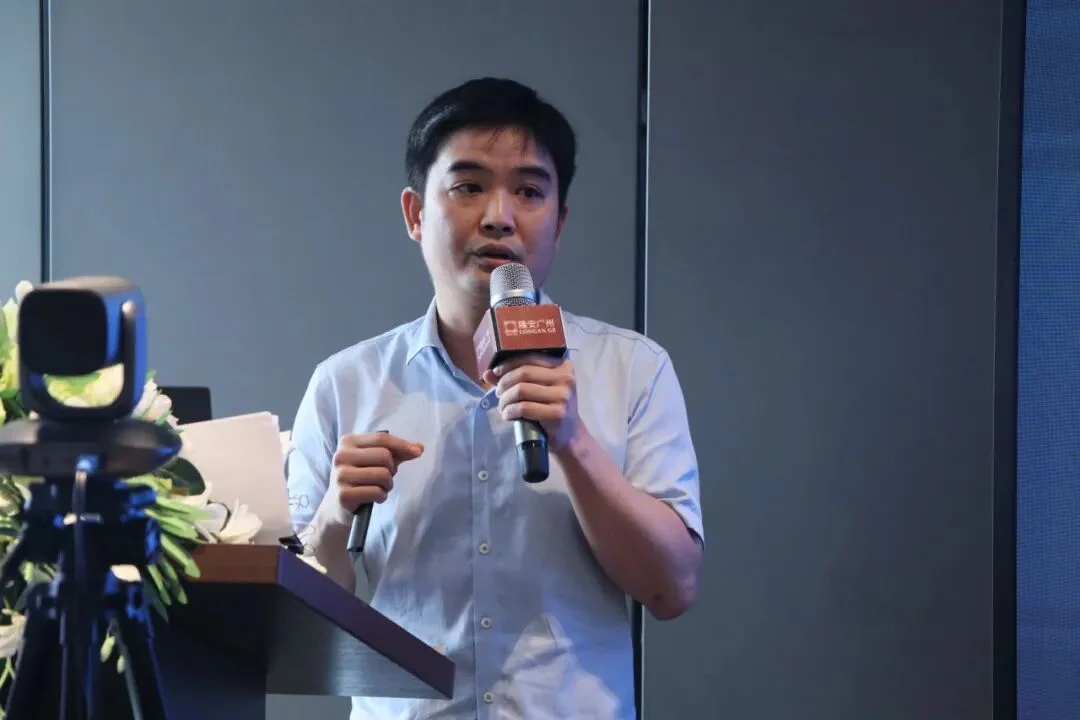 Director He Donghua
Director of the Music Copyright Committee of the Guangdong Pop Music Association
Under the topic of “Building public service platforms for the music industry and optimizing and enhancing music copyright service capabilities”, Director He Donghua pointed out that public service platforms for the music industry have characteristics such as value, fairness, diversity, convenience, and intelligence. They help improve information transparency and symmetry, promote industry norms and self-discipline, and facilitate resource integration and efficient utilization. Director He said that the current copyright management system has certain advantages, such as effectively protecting the rights and interests of music creators and performers, promoting cooperation among all parties in the music industry, and improving the efficiency of music copyright management and use. However, there are still some problems and deficiencies, such as the imperfect collective management system for music, lack of social supervision, and insufficient ability to quickly resolve litigation disputes. Then, Director He introduced specific measures to optimize the industry copyright management capabilities of public service platforms, including building copyright information databases, establishing fair and transparent trading systems, and providing mediation services for copyright disputes. Subsequently, Director He briefly introduced cases of platform implementation and proposed development trends and prospects for public service platforms, such as strengthening technological innovation and platform upgrading, promoting cross-border cooperation and resource integration, establishing win-win cooperation mechanisms, and improving the legal and regulatory system.
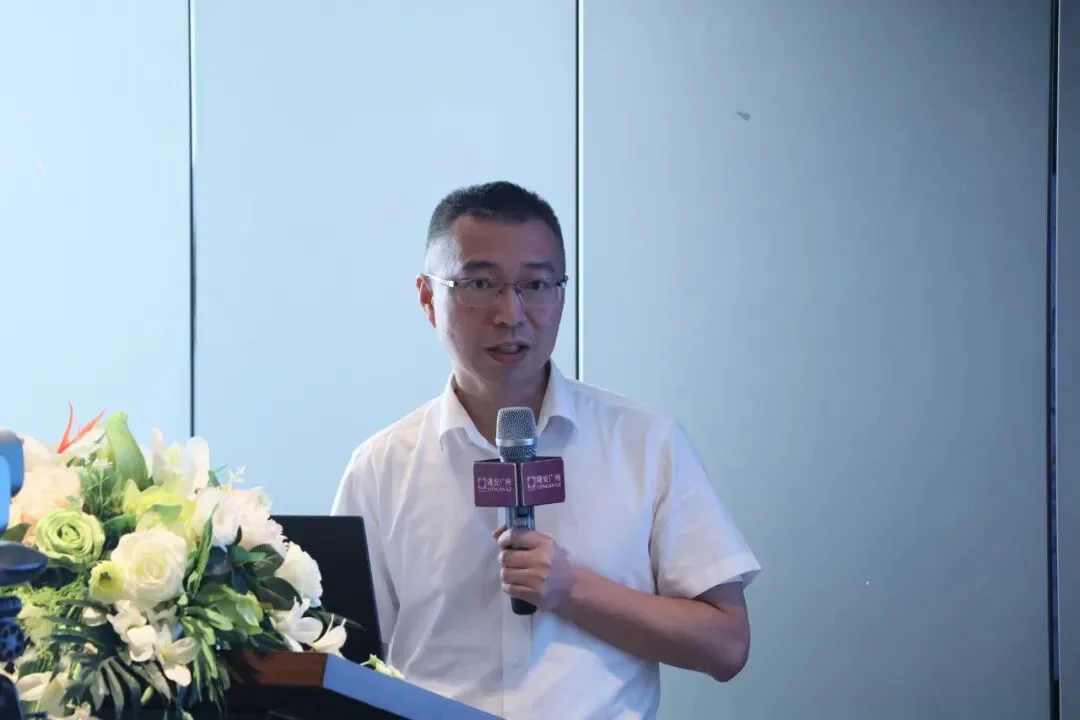 Deputy Director Tang Yi
Office Management Committee of the Nanyue Notary Office in Guangzhou, Guangdong Province
Deputy Director Tang Yi gave a presentation on “The Role of Notarization in the Field of Music Copyrights”. Director Tang first briefly introduced the functions of notarization, including proof, supervision, communication, and service, and emphasized the advantages of notarization in intellectual property litigation practice. Then, Director Tang focused on three aspects: notarization and the confirmation, protection, and use of music copyrights. In terms of confirmation, notarized documents issued by notarization institutions that prove facts related to the creation of copyrights have the same evidentiary value as copyright registration certificates, which can help confirm music copyrights. In terms of protection, when musical works are faced with infringement, by promptly handling notarization of evidence preservation, they can be fixed and retained. In terms of use, Director Tang proposed that information-based notarization products of notarization institutions can be used to help music copyright holders use their rights better through a “pay-per-use + notarized deposit” method. At the end of the presentation, Director Tang discussed the compliant use of music copyrights. In the era of digital music, the “authorize first, use later” model of music copyrights is becoming increasingly difficult to adapt to the speed of digital music dissemination. Can the “use first, pay later” model be adopted? This is something that every practitioner in the music industry and legal professionals should think about deeply.
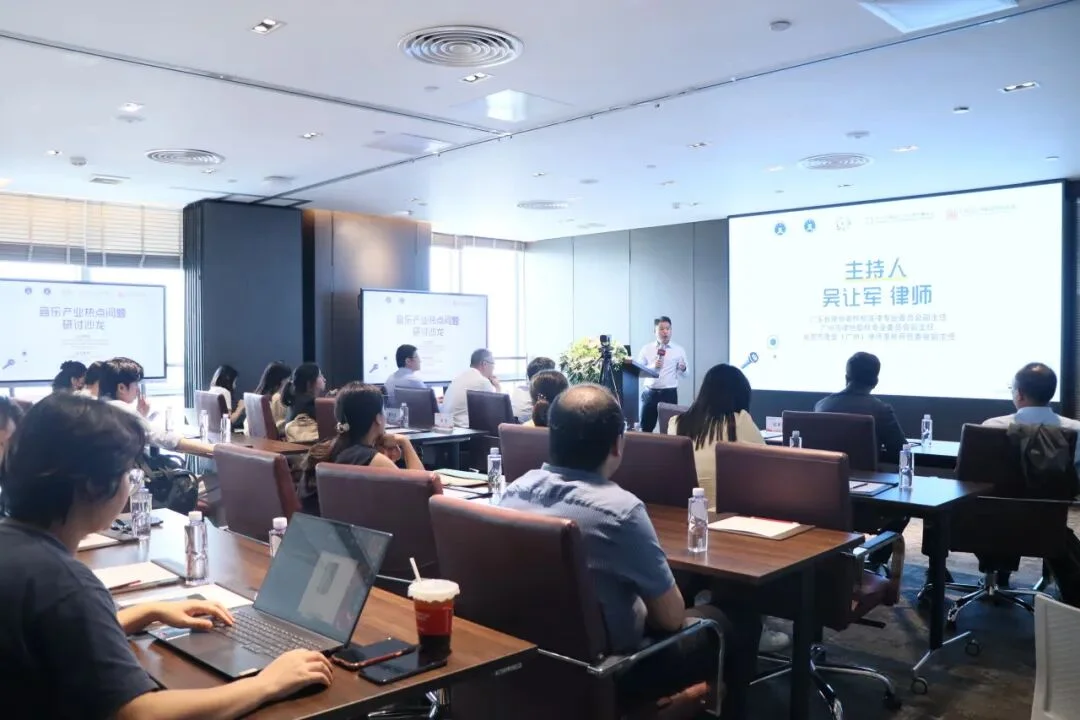
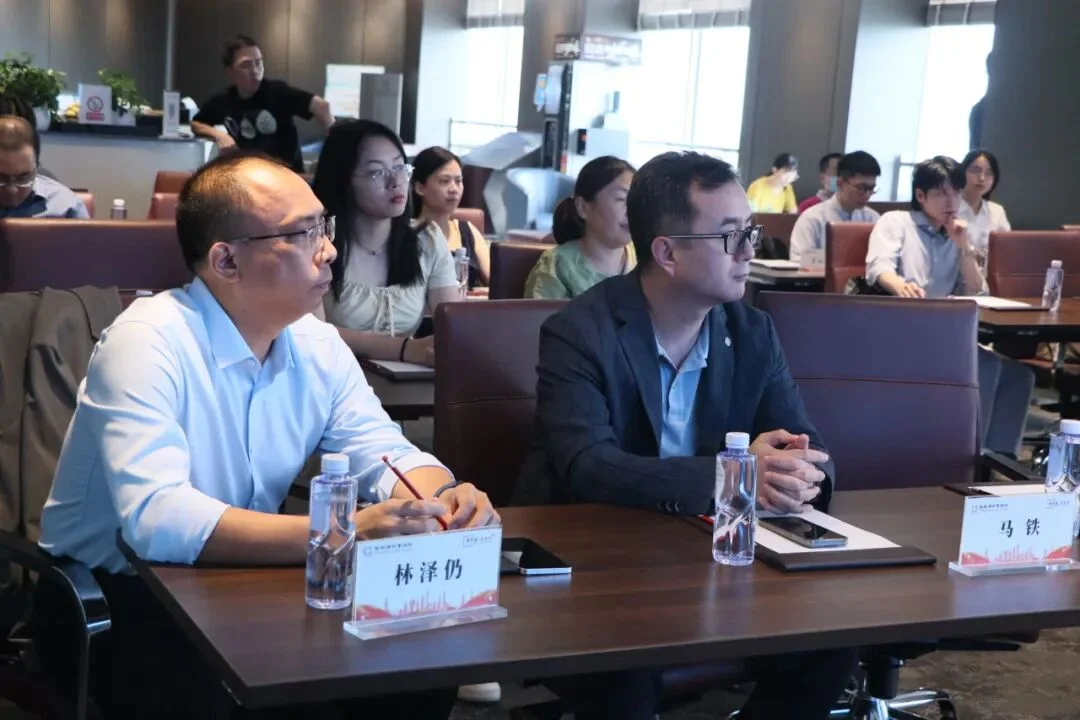
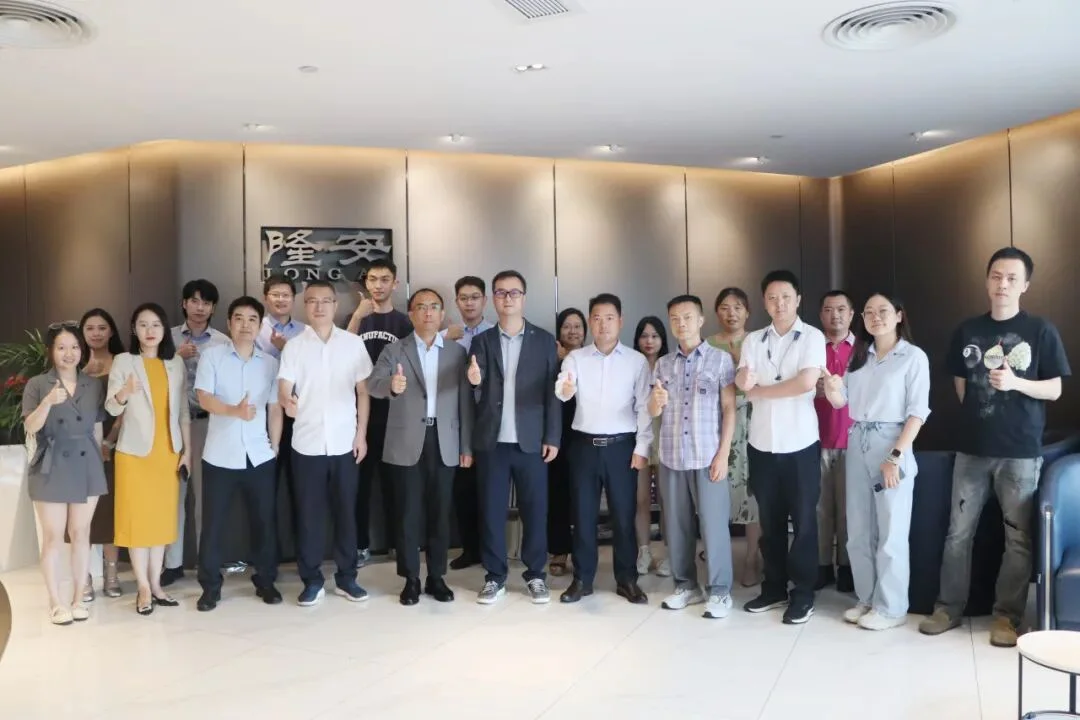 This “Music Industry Hot Issues Seminar Salon” brought together the professional wisdom of the Copyright Law Committee of the Guangzhou Lawyers Association, the Copyright Law Committee of the Guangdong Province Lawyers Association, the Guangdong Pop Music Association, the Nanyue Notary Office, the Chinese Music Copyright Association, and Longan Guangzhou. It analyzed specific hot issues in the music industry from aspects such as difficulties in collective management of music copyrights, rights protection challenges, public service platforms, and notarization services. It provided solutions to closely concerned issues in the music industry such as music copyright rights protection and use, which is of great significance for promoting the sustainable and high-quality development of the music industry.