
With the rollout of generative AI, cloud gaming and other new technologies, legal disputes are rising around ownership of AI-generated game content and cross-border IP enforcement, making precise and efficient judicial protection ever more urgent for the game industry. To implement the digital cultural industry development plan outlined in the “15th Five-Year Plan” and respond to industry concerns, the “Symposium on Judicial Protection of Intellectual Property in New Game Business Formats” was recently held at the Guangdong (Guangzhou) Game Enterprise Service Center. The event was co-hosted by the Guangdong High People’s Court and the Guangdong Game Industry Association. Longan Guangzhou partner Yu Yao was invited to attend and delivered a professional presentation.
Court Research: Adjudication Standards and Protection Paths
At the symposium, representatives from Guangdong courts and the Guangdong Game Industry Association delivered speeches. Lu Xiaokun, Executive President of the Guangdong Game Industry Association, outlined the current state of Guangdong’s game industry and elaborated on the new IP protection challenges under AI, calling for protection pathways that match the industry’s development patterns. The head of the Intellectual Property Division of the Guangdong High People’s Court said the symposium would review nearly a decade of game-related IP disputes and pain points, produce an industry research white paper, and focus on four major judicial difficulties, including copyright boundaries and cross-border rights enforcement for Chinese game companies going global, in areas such as cloud gaming and AI. Representatives from the Guangzhou Intellectual Property Court, Shenzhen Intellectual Property Tribunal, and Guangzhou Internet Court exchanged views on practical hot topics, analyzing AIGC, cheats, private servers, AI deepfakes and other issues, while guiding enterprises to protect their rights in accordance with the law. A representative of the IP Division of the Guangdong High People’s Court summarized that courts would directly confront the legal challenges posed by AI and cloud gaming, steadily push forward the white paper on judicial protection of game IP, and provide rule-of-law support for the high-quality development of the game industry.

Industry Landscape: Enterprise Pain Points and Compliance Demands
Legal heads from 14 game companies, including Tencent, NetEase and 37 Interactive Entertainment, shared views on industry pain points such as black and gray industry governance, minor protection, and overseas rights protection. They noted that cheat programs, private servers and account black markets are becoming increasingly chain-based and platform-based, and suggested that platform governance responsibilities be further refined in areas such as account linking and keyword blocking, while building information-sharing and evidence-chain mechanisms that connect companies, platforms and payment institutions. On minor protection, they called for clearer liability boundaries in scenarios such as account renting/selling, game boosting and cloud gaming, and for improved rules for comprehensively determining the “actual user and consumption behavior.” On overseas rights protection, they recommended clarifying how cross-border platform complaints connect with judicial procedures, improving standards for identifying overseas subjects, preserving evidence and establishing jurisdictional connection points, and lowering the cost of overseas enforcement.

Professional Perspectives: Scholars and Lawyers
Professor Cai Wei from the Civil and Commercial Law School of Sun Yat-sen University noted that the industry must balance multiple conflicts among gaming companies and platforms, new and old practitioners, and corporate rights versus minor protection. Supporting governance measures would help optimize the industry’s business environment, he said, adding that he would continue in-depth research and exchanges.
As the representative of Longan Guangzhou, lawyer Yu Yao focused her speech on four core topics: governance of new gray/black industry formats, infringement of game play modes and copy mechanics, new legal issues involving AI games, and difficulties in overseas rights protection for game companies. On gray/black industry governance, she pointed out the practical dilemma of “high per-complaint costs and repeated infringement,” and suggested that judicial practice further clarify platforms’ higher duty of care in keyword blocking and account linking. On infringement of game copy and play modes, she stressed that such content has a pronounced time-sensitivity; mechanically waiting for a judgment often causes companies to miss release windows, and evidence of independent commercial value is objectively difficult to produce, so more reasonable compensation calculation methods should be explored. On AI-related challenges, she analyzed the current lack of protection for virtual character voice rights and the difficulty of establishing infringement when AI is used to adjust numerical parameters to evade traditional substantial-similarity comparisons. On protecting game companies’ interests after going overseas, she dissected the controversy over recognizing the competitive interests of foreign games in the domestic market and highlighted practical pain points such as missing jurisdictional connection points in cross-border rights protection.
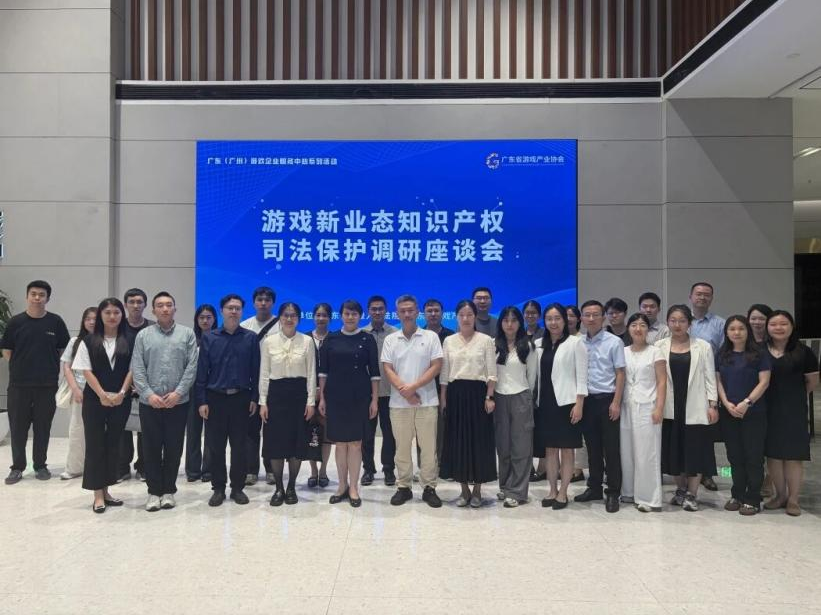
The symposium brought together professional forces from multiple fields and further consolidated judicial and industry consensus on compliance governance for the game sector. Yu Yao’s analysis accurately identified cutting-edge difficulties and deeply deconstructed practical pain points, offering legal suggestions that were both targeted and implementable. Her participation fully demonstrated Longan Guangzhou’s rich experience and forward-looking vision in legal services for the game industry.
Looking ahead, Longan Guangzhou will continue to deepen its presence in the game and digital entertainment legal field, leverage its professional accumulation in gray/black industry governance and cross-border rights protection, and provide professional, precise legal services to enterprises, helping the industry grow in a healthy and standardized manner.